Home page
» HISTORY
» States of Azerbaijan
» Atropatena
Atropatena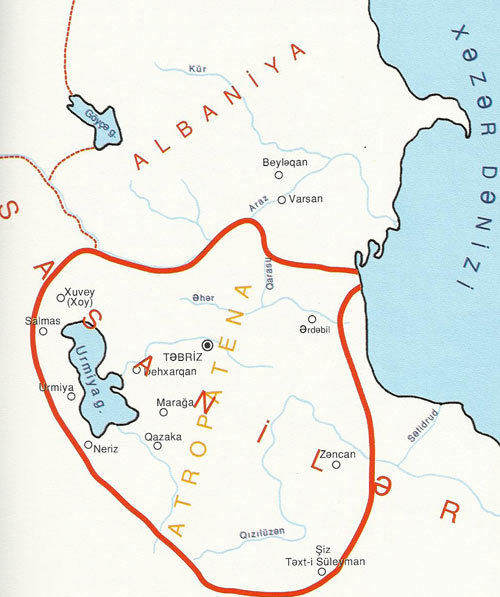 Atropatena state was formed in 323 BC. Atropatena lands were within of Ahemenids (Haxamenesi) state borders. There were about 20 satrapy in state and 10 of them consisted of Atropatena. Alexander the Great defeated Shah of Iran Darius III in 331 BC, put an end to the existence of the state of Ahemenids. Atroptena had gained the status of semi-independent state, subject to Macedonians. Some historians claim that the name of Azerbaijan was taken from ruler of Atropatena – Atropat. An author of Jami-at-tawarikh Rashiddadin together with Mohammed Hussein bin Khalaf from Tabriz insist that Azerbaijan word is a Turkic word. In their opinion, Azer means high place, and bayqan the adults . In independent Atropotena state that established in lands of South Azerbaijan 270 years after the Manna state the economy had grown at a high level. People of Atropatena had achieved great successes in farming, gardening and livestock. The country\'s natural resources - gold, copper, iron, lead, silver were the main factor of wealth. The historical notes read that tribes like kassits, mard, tiboren, mugh and uti lived in the lands of this state. Atropatena fell to subjugation of Parthian state in II-I centuries BC, that ended Ahamenids. In 226 BC Sasanids ended the rule of Parthians. It is assumed that Atropatena could protect its independence during Sassanids. The capital city was Qazaka Rulers: 20-years of III century BC-? Artabazan 36-20-years BC Artabazd approx. AD 2 – 20 Ariobarzan 
|
